Common signs and symptoms of autism
Recognize the symptoms that tell your child’s story







Understand autism, one sign at a time
Every child is unique and autism can look different from one child to the next. Some characteristics may involve challenges or behaviors that present differently from others.

Atypical eye contact

Repeated use of words or phrases(echolalia)

Intense or obsessive interests

Prefers to be or play alone

Strong reactions to loud noises, bright lights, textures, or tastes

Toe walking or unusual gait

Difficulty making friends or socializing

Adamant on following certain routines

Unusually fearful or fearless

Delayed or atypical use of language

Easily upset with change

Hyperactive or impulsive behavior

Flaps hands, rocks back and forth, paces, or spins (stimming behavior)

Plays in unusual ways(lines up objects, views from odd angles, sorts items instead of playing, throws or stacks toys)

Delayed or atypical gross or fine motor skills(challenges with running, climbing, jumping, writing, or using utensils, buttons or zippers)
Autism defined
Autism spectrum disorder, or ASD, is a condition that affects the brain development of a child, impacting the way they socialize, communicate and behave. No diagnosis is the same, and the effects of autism are deeply individual and unique to each person or child.
The importance of an autism diagnosis
An autism diagnosis is an important first step to better understand your child’s unique needs, communication style, and how to best support their individual growth. With an early diagnosis and developmental therapy, your child can build the skills needed to reach their full potential and build lasting connections with others.
We currently offer virtual diagnostic evaluations for children between 18 months and 9 years old across numerous major cities.
Yes, I am interested in a virtual autism diagnosis for my child
The power of in-home, play-based developmental therapy
Our play-based approach builds on your child’s natural curiosities and interests, encouraging growth at their own pace across various settings. Our developmental model focuses on individual strengths and challenges, promoting regulation techniques, strengthening of relationships and helping families achieve positive, lasting outcomes.
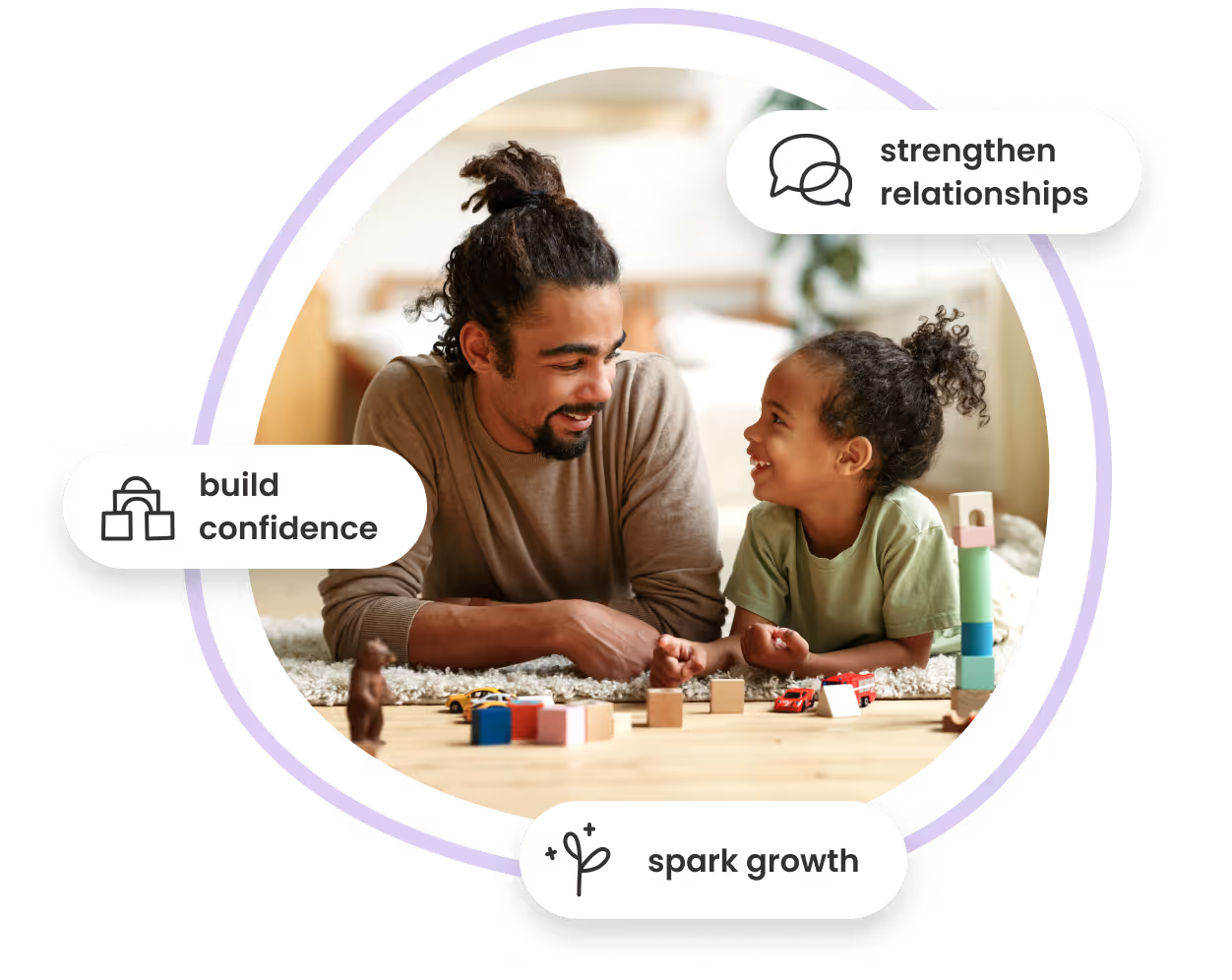
Therapy that emphasizes the entire family
Not only does our therapeutic approach focus on functional development for your child, but it also concentrates on skills needed to create and maintain deep and meaningful relationships.
Join your child in their therapy journey. Your caregiver involvement directly impacts your child’s developmental progress - for the better!